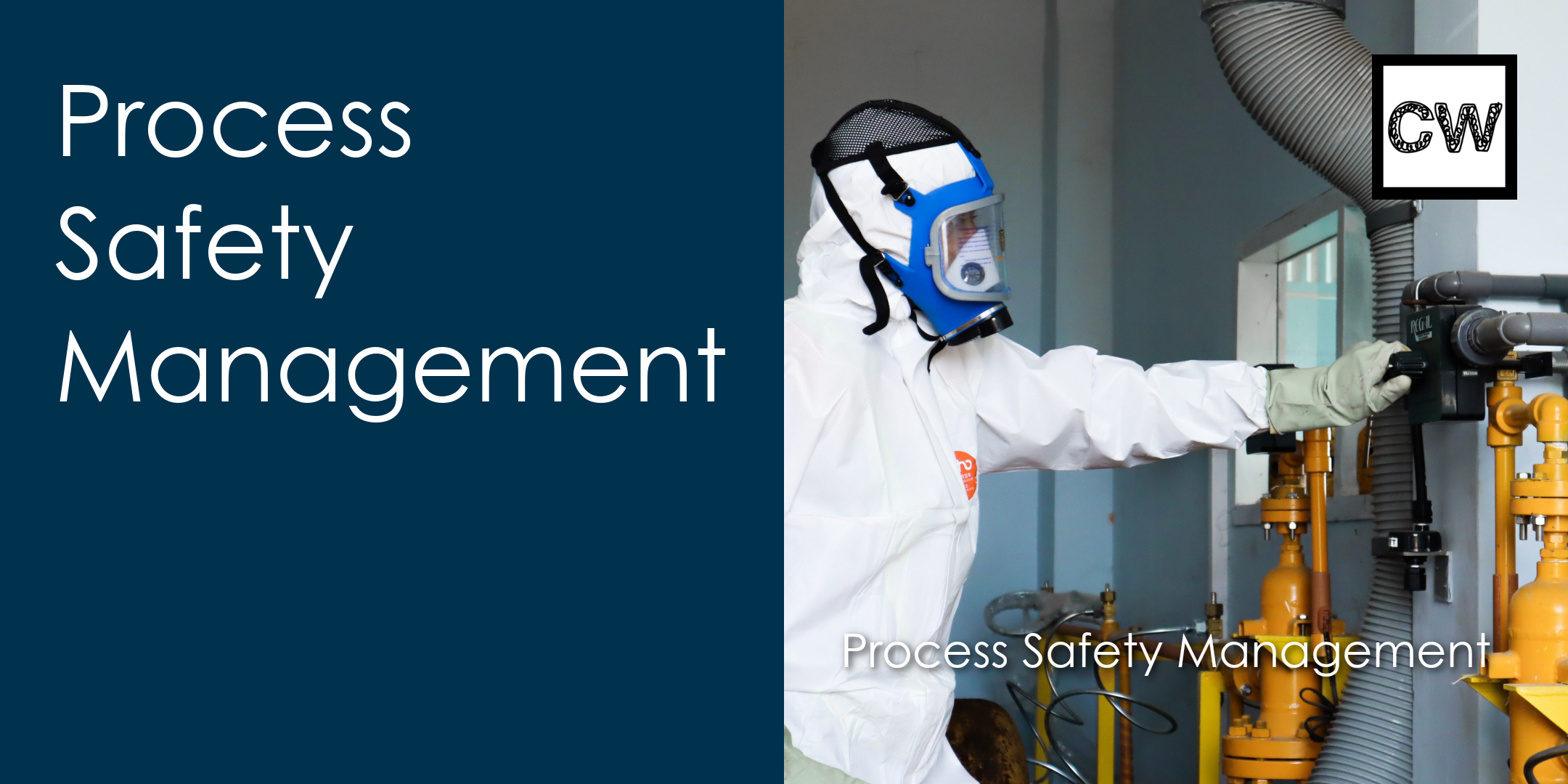
Process Safety Management (PSM) is a systematic approach to preventing major industrial accidents involving hazardous materials, processes, and energy. Unlike occupational safety, which often focuses on individual workplace injuries, process safety addresses the potentially catastrophic consequences of failures in process design, equipment, operating systems, safeguards, and organizational controls.
This two-day program provides participants with a practical foundation in principles, elements, and application of Process Safety Management. Participants will examine how major accidents develop, how multiple safeguards can fail simultaneously, and how an integrated PSM system helps organizations identify hazards, evaluate risks, maintain critical barriers, manage change, and continuously improve process safety performance. The source material emphasizes this multiple-barrier perspective: catastrophic events typically arise not from a single failure but from the simultaneous failure of several safeguards.
The program covers the PSM lifecycle from design and engineering through construction, commissioning, operations, maintenance, change, emergency management, and eventual decommissioning.
At the end of this course, participants should be able to
- Define fundamental process safety concepts, terminology, and the key elements of an effective PSM system.
- Differentiate process safety hazards and risks from conventional occupational safety concerns.
- Explain how major accident events develop through combinations of initiating events, failed safeguards, and escalating consequences.
- Describe the major elements of PSM and explain how they interact across the process/facility lifecycle.
- Identify process hazards using appropriate Process Hazard Analysis techniques.
- Apply basic risk assessment principles using likelihood, consequence, safeguards, and risk-reduction concepts.
- Evaluate safeguards using the Hierarchy of Controls and layered-defense principles.
- Explain how operating practices, equipment integrity, contractors, and organizational or technical changes can affect process safety risk.
- Differentiate immediate causes from underlying and systemic causes when examining process safety incidents.
- Use process safety indicators, audits, management review, and lessons learned to identify opportunities for continuous improvement.
Course Outline
- Session 1 – Foundations of Process Safety Management
- Fundamentals of Process Safety Management and its importance in preventing major industrial accidents
- Process Safety vs. Occupational Safety; understanding hazards, risks, loss of containment, and major accident events
- Session 2 – The PSM Framework and Lifecycle
- Overview of the core elements of Process Safety Management and how they work as an integrated system
- Roles, responsibilities, accountability, and the importance of a complete PSM framework rather than isolated safety activities
- Application of PSM throughout the facility lifecycle, from design and engineering through operations, maintenance, change, and decommissioning
- Session 3 – Knowing the Process and Its Hazards
- Process Safety Information (PSI) and the importance of understanding process design, operating intent, and critical operating parameters
- Key sources of process information, including P&IDs, chemical and equipment data, controls, safety systems, procedures, and incident history
- Safety-Critical Equipment, operating limits, and the relationship between accurate process knowledge and effective risk management
- Session 4 – Process Hazard Analysis and Risk Assessment
- Purpose and process of Process Hazard Analysis, including the role of multidisciplinary teams and competent facilitators
- Hazard identification, risk evaluation, consequences, likelihood, safeguards, and residual risk
- Overview of key PHA techniques such as HAZID, HAZOP, What-If, FMEA, FTA, ETA, Bow-Tie, LOPA, SWIFT, and related approaches
- Session 5 – Risk Reduction and Preventing Escalation
- Principles of risk reduction, safeguards, controls, and prevention of loss of containment
- Hierarchy of Controls and the importance of inherently safer design and engineering controls
- Layered protection using operating limits, alarms, interlocks, trips, relief systems, and Emergency Shutdown systems
- Session 6 – Managing Safe Operations and Change
- Standard Operating Procedures, Safe Work Practices, Permit-to-Work systems, training, competency, and contractor management
- Management of Change and the safe assessment of technical, operational, procedural, and organizational changes
- Pre-Startup Safety Review, safe start-up and shutdown, emergency preparedness, and operational communication
- Session 7 – Asset Integrity and Safe Work Execution
- Mechanical Integrity and Asset Integrity principles for maintaining containment and reliable safety systems
- Identification and management of Safety-Critical Equipment, including inspection, testing, maintenance, and corrosion management
- Integration of equipment integrity with safe work practices, competent personnel, contractor management, and operational controls
- Session 8 – Learning, Measuring, and Sustaining PSM
- Incident investigation, immediate versus systemic causes, lessons learned, and corrective actions
-
- Process Safety Performance Indicators, including leading and lagging indicators for monitoring
-
- PSM health
Course Duration
- 2 days – face to face
Delivery Methodologies
- Lecture
- Individual activities
- Online Quizzes
- Plenary Discussions
This course is recommended for
- Process Safety Engineers and Managers
- Professionals involved in Process Safety
- Engineering, Operations, and Maintenance Professionals
- HSE, Pollution Control, and Risk Management Professionals
- Emergency Response Professionals
- Operational Excellence Professionals